
Virtual production is basically the biggest thing to happen to filmmaking since movies went digital. It’s completely changing how we tell stories, giving filmmakers incredible creative control while slashing costs and cutting down production time. Shows like The Mandalorian and countless indie projects prove that virtual production isn’t just some fancy tech; it’s reshaping entertainment as we know it. Many post production studios are now asking what is virtual production and how it will impact their workflows.
The numbers speak for themselves. The global virtual production market hit $2.79 billion in 2024 and experts predict it’ll reach $11.02 billion by 2030. That’s a massive 14.72% growth rate annually. This explosion comes from everyone jumping on LED walls, real-time rendering, and motion capture tech that defines modern virtual production.
What Virtual Production Actually Means
Think of virtual production as filmmaking’s complete makeover. To understand what is virtual production, consider how it replaces the traditional approach: instead of shooting everything first and fixing it later in post-production, virtual production mixes computer graphics, real-time rendering, and live performance capture right during filming. This means filmmakers can see and interact with digital worlds instantly, creating seamless blends between real and virtual elements.
The tech works through multiple systems working together: massive LED walls showing photorealistic environments, real-time engines like Unreal Engine processing complex 3D scenes, and precision camera tracking that adjusts digital perspectives instantly. When actors perform against these LED volumes on a virtual production set, they get proper lighting and reflections from the displayed environments, ditching that fake green screen look.
The Tech That Makes It All Work
Virtual production depends on several key pieces working together perfectly. LED wall systems are the backbone of curved setups reaching 20 feet high and 75 feet across, like what they used in The Mandalorian. These walls show computer-generated backgrounds in 4K or higher, giving directors and cinematographers immediate visual feedback on the virtual production set.
Real-time rendering engines, especially Unreal Engine, process complex 3D environments instantly, adjusting lighting, shadows, and perspective as cameras move. This ensures virtual backgrounds respond naturally to film techniques, keeping everything looking authentic throughout shooting.
Camera tracking technology is crucial too, using advanced systems that monitor camera position and direction with millimetre precision. This data goes straight to the rendering engine, making sure virtual environments line up perfectly with camera movements, creating convincing depth effects and maintaining spatial consistency.
Traditional vs Virtual Production
The shift from traditional to virtual production brings major advantages across multiple areas. Traditional filmmaking requires extensive location scouting, weather-dependent scheduling, and complex post-production workflows that stretch project timelines significantly. Post production studios traditionally handled most visual effects work after filming was completed.
Virtual production eliminates these constraints by giving complete environmental control inside studios. Productions can jump from arctic landscapes to tropical beaches in minutes, keeping consistent lighting and eliminating weather delays.
Better Performances and Creative Freedom

Actors perform better with virtual production. When performers see their environment instead of imagining it against green screens, their reactions become more authentic and emotionally connected. Pedro Pascal’s performance in The Mandalorian showed this advantage: he could interact naturally with visible alien landscapes and spacecraft on the virtual production set.
The lighting benefits are equally impressive. LED walls provide natural lighting that matches displayed environments, creating realistic reflections on props, costumes, and actors. This authentic lighting eliminates green spill from chroma key work and reduces extensive post-production lighting fixes.
Industry Applications and Growth
Virtual production examples cover diverse entertainment sectors. The Mandalorian used virtual production for over 50% of the footage, proving the technology works for sustained, high-quality content. Productions like Blade Runner 2049, Avengers: Endgame, and Rogue One integrated virtual production elements for their distinctive visual styles. Post production studios are increasingly integrating virtual production capabilities to stay competitive.
Film and television lead virtual production adoption, accounting for roughly 28.5% of market share in 2023. Advertising and commercial production are growing rapidly, though, as agencies recognise the technology’s ability to create compelling campaigns without extensive location shooting.
Corporate communications and educational content represent expanding applications, with companies using virtual production for training materials, product launches, and immersive presentations. This diversification shows virtual production’s versatility beyond traditional entertainment.
Global Market Development

North America leads the market with 36.5% of the global virtual production market share in 2023, driven by Hollywood’s rapid technology adoption and infrastructure investments. The US specifically shows strong growth projections, with market value expected to reach $3.05 billion by 2034. Many post production studios in the region are retrofitting their facilities with virtual production capabilities.
Asia Pacific shows the fastest growth, with China, Japan, and South Korea establishing major LED volume facilities. China recently unveiled the world’s largest LED virtual production volume, featuring a 270-degree curved screen with a 1,700 m² display area, positioning the region as a global virtual production hub.
India’s virtual production market reached $106.40 million in 2024, with projections showing growth to $294.54 million by 2033, driven by expanding OTT platforms and cost-efficient production demands.
Career Paths in Virtual Production
Getting into virtual production is a common question as the industry expands rapidly. Multiple career pathways offer entry points for professionals with diverse skill sets. Understanding what virtual production becomes essential for anyone entering this field.
Technical artist roles need proficiency in Unreal Engine, 3D modelling software, and understanding of real-time rendering workflows. These positions involve creating digital environments, optimising performance, and troubleshooting technical challenges during production.
Virtual production supervisors need comprehensive knowledge of virtual production workflows, cinematography principles, and team management skills. They coordinate between technical and creative departments, ensuring smooth integration of virtual and practical elements.
XR specialists focus on LED volume calibration, camera tracking integration, and system optimisation. Their responsibilities include equipment setup, crew training, and research into emerging technologies.
Learning and Training Options
Virtual production training opportunities have expanded significantly, with institutions like Florida State University offering dedicated virtual production programmes. These courses combine theory with hands-on experience using industry-standard equipment and software.
Online certification programmes provide accessible entry points for professionals transitioning from related fields. Companies like Epic Games offer free Unreal Engine tutorials, while specialised academies like Pearl Academy provide comprehensive 11-month virtual production certifications.
Skills development should focus on 3D software proficiency, particularly Unreal Engine, lighting principles, camera tracking systems, and collaborative workflow management. Understanding both technical and creative aspects is essential for success in virtual production environments.
Technical Requirements and Setup
Virtual production set requirements involve substantial initial investments but offer long-term operational savings. LED wall installations typically need high-resolution panels with pixel pitches between 1.2 mm and 2.5 mm, ensuring image quality suitable for close-up cinematography. Post production studios considering virtual production must carefully plan their facility upgrades.
Processing power demands remain significant, with virtual production systems requiring high-performance GPUs capable of real-time 4K or 8K rendering. Industrial Light & Magic’s StageCraft system uses seven dedicated machines to power their LED volumes.
Camera tracking systems employ various technologies, including optical tracking, inertial measurement units, and encoded lens data. These systems must provide sub-millimetre accuracy to maintain convincing virtual environment integration.
Studio Design Considerations
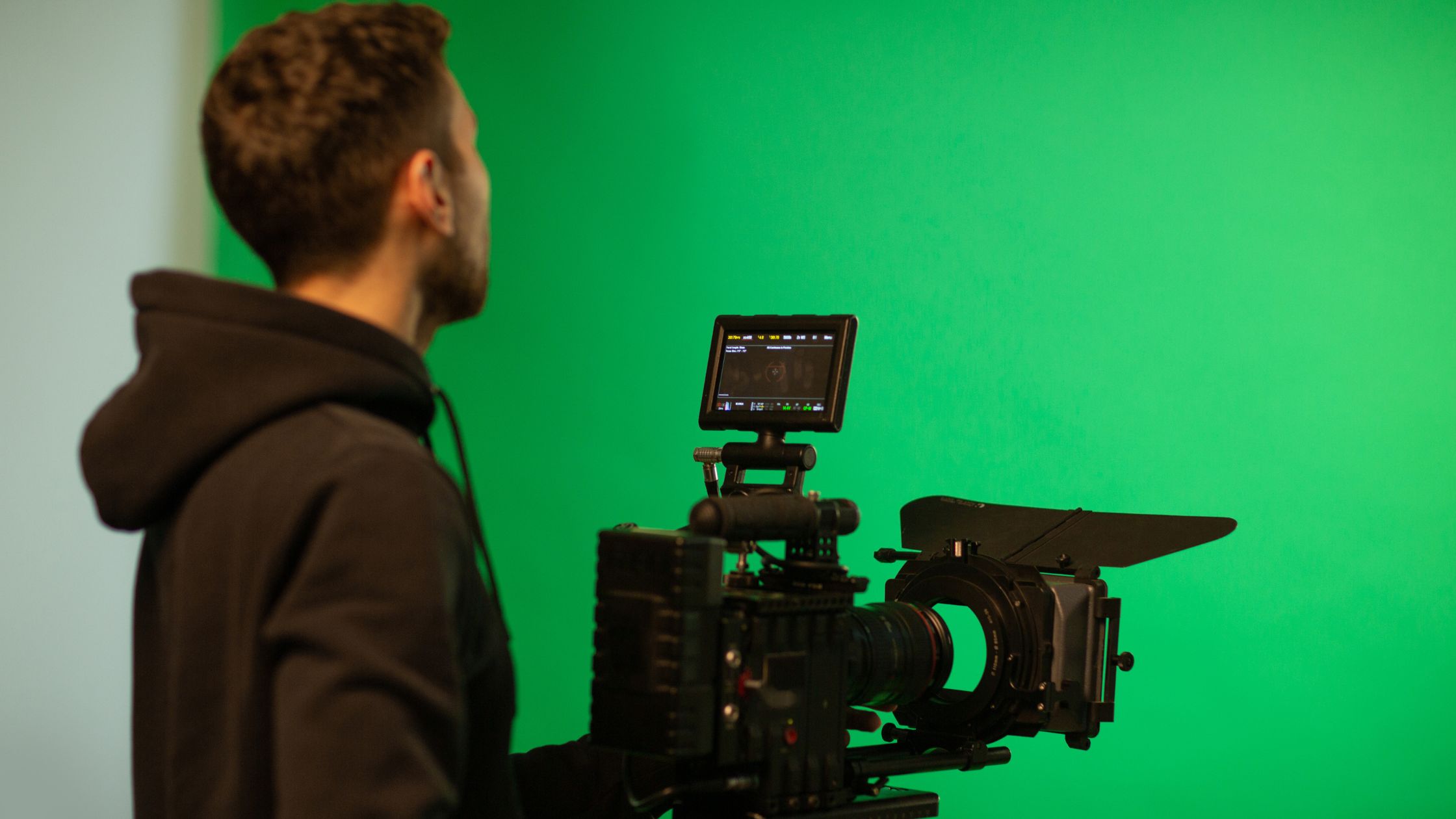
LED volume design considerations include ceiling integration, curved wall configurations, and adequate power infrastructure. Successful installations like those at MELS Studios demonstrate the importance of proper acoustic treatment and cooling systems for extended operational periods on a virtual production set.
Workflow integration requires coordination between virtual art departments, technical directors, and traditional camera crews. Pre-production planning becomes more critical, as virtual environments must be completed before principal photography begins. Post production studios must adapt their workflows to accommodate these new requirements.
At Black Hanger Studios, our extensive facilities include one of the UK’s largest permanent green screen cycloramas and significant experience with digital production methods, positioning us well for virtual production integration. Our 32,000-square-foot space provides ample room for large-scale LED volume installations.
Future Trends and Outlook
AI integration represents a significant growth area, with AI-driven rendering systems reducing processing requirements and enabling more complex real-time environments. These advances make virtual production accessible to smaller studios and independent producers.
Cloud-based workflows are emerging, allowing remote collaboration and reducing hardware requirements at individual facilities. This development could democratise virtual production access, enabling global creative teams to contribute to projects regardless of location. Many are still asking what is virtual production’s full potential is in cloud environments.
Extended reality applications beyond traditional filmmaking show promising potential, including virtual training programmes, architectural visualisation, and product development presentations. These applications suggest virtual production technology will influence industries far beyond entertainment.
Challenges to Consider
High initial costs remain the primary barrier to virtual production adoption. Complete LED volume installations can require investments exceeding several million dollars, making the technology accessible primarily to well-funded studios and post production studios with significant capital.
Technical expertise requirements present ongoing challenges, as virtual production demands skills spanning traditional filmmaking, game development, and systems engineering. Building qualified teams requires significant training investments and competition for skilled professionals.
Content creation pipelines must adapt to virtual production requirements, with pre-production becoming more intensive as virtual environments require completion before principal photography begins. This shift challenges traditional production schedules and budget allocations.
The Bottom Line
Virtual production represents more than just a tech upgrade; it’s a fundamental shift toward more efficient, creative, and collaborative filmmaking. The market’s projected growth from $2.79 billion in 2024 to $11.02 billion by 2030 reflects industry recognition of virtual production’s transformative potential. Understanding what is virtual production has become crucial for industry professionals.
As the technology becomes increasingly accessible and sophisticated, virtual production will become standard practice across the entertainment industry, offering creators unprecedented opportunities to realise their artistic visions while maintaining practical and economic viability.
The future of filmmaking is virtual, real-time, and limited only by imagination. For those ready to embrace this revolution, opportunities are as boundless as the digital worlds we can now create.
Frequently Asked Questions

How do I get into virtual production?
Start with Unreal Engine tutorials and 3D software training. Consider formal education programmes or online certifications. Build a portfolio showing real-time rendering skills and seek entry-level positions at studios with virtual production capabilities.
What is virtual production in film?
Virtual production combines real-time computer graphics with live-action filming using LED walls instead of green screens. Actors perform against photorealistic backgrounds that respond to camera movements, creating convincing environments without location shooting.
What are some virtual production examples?
The Mandalorian used over 50% virtual production, while films like Blade Runner 2049, Avengers: Endgame, and Rogue One incorporated virtual production elements. These projects demonstrate the technology’s effectiveness across different genres and scales.
How much does virtual production cost?
Initial LED volume installations can cost several million dollars, but operational savings through reduced location shoots, shorter post-production timelines, and weather independence often justify these investments for regular users and virtual production set operators.
What equipment is needed for virtual production?
Essential components include high-resolution LED walls, real-time rendering systems (typically Unreal Engine), precision camera tracking equipment, and high-performance computers with dedicated GPUs capable of real-time 4K rendering.